Refine by
185 products
Grill elements are generally fitted at the top of an oven, while base elements provide heat from below. Use the full appliance model and product or service number to identify the correct replacement for the affected cooking function.
Check the original element reference, wattage, voltage, shape, fixing centres and terminal arrangement. Some grill elements have separate heating circuits for different grill settings. A single-circuit element is not a direct replacement for a dual-circuit design.
Maddocks stocks genuine original and compatible elements for selected cooker and oven models. Where available, use Maddocks Pinpoint to identify part references and the Model Compatibility Checker on the product listing to check suitability.
If the grill does not heat, heats unevenly or works on only one setting, the upper element or its control circuit may be faulty. With a dual-circuit grill, a problem affecting one heating section does not always mean the entire element has failed.
If food receives insufficient heat from below, the base element is one possible cause. However, ovens can use several elements across different cooking functions. Check whether the fault affects bottom heat only or other settings too.
Related faults may involve thermostats or thermal cut-outs, not just the element. Confirm the cause through testing and check any required element fixings before replacing the component.
Match the complete appliance model and original part reference. Compare the element position, wattage, voltage, dimensions, mounting points and electrical terminals. For grill elements, also check whether the original uses one or more heating circuits.
A dual-circuit grill has separate heating sections that can be controlled according to the oven's design. It may support full-width and reduced-area grilling. Replace it only with a manufacturer-approved element having the correct circuit arrangement and ratings.
The grill element may have failed, but faulty controls, wiring or thermal protection can produce similar symptoms. An element may fail without visible damage. The heating circuit should be diagnosed before ordering a replacement.
Not necessarily. The base element may be defective, but a thermostat, selector switch or electrical connection could also be responsible. Establish which heating function is affected and confirm the fault before replacing parts.
Oven Grill & Base Heating Elements
Browse replacement grill and base heating elements for cookers and ovens. This range includes upper grill elements and lower oven elements in the shapes and ratings listed for compatible appliances.
185 products


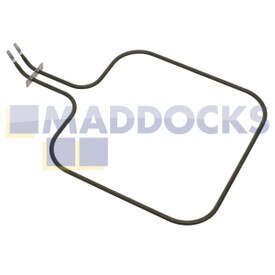
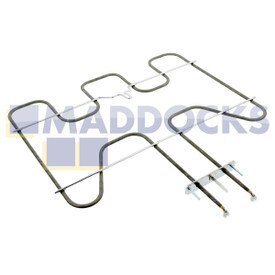
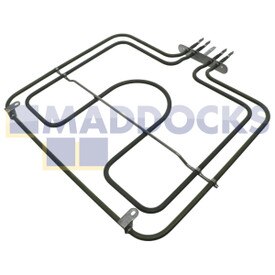


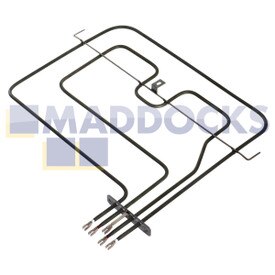
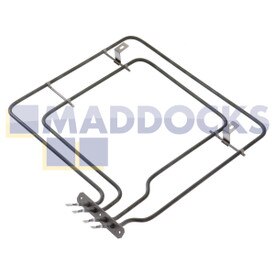

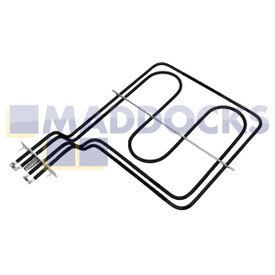
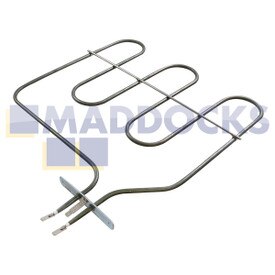
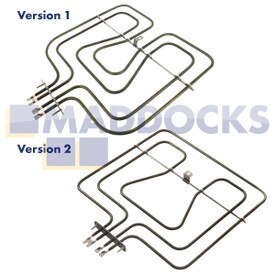
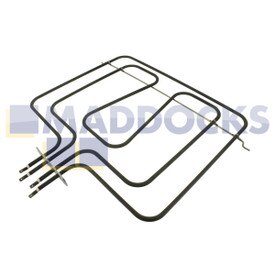
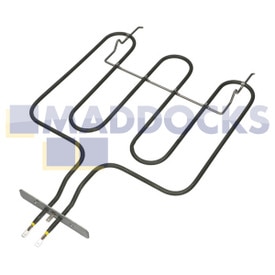
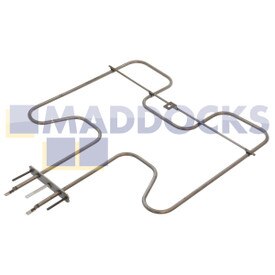
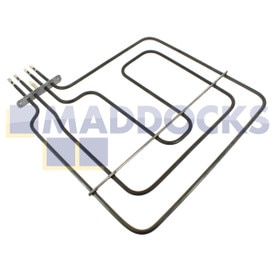
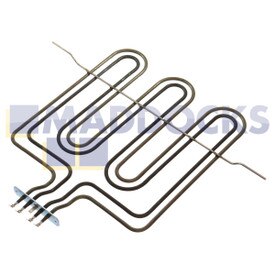
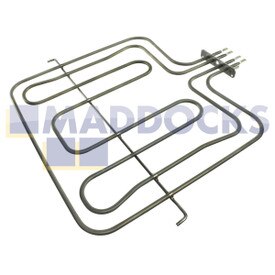
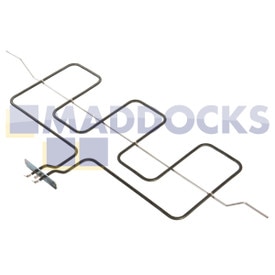
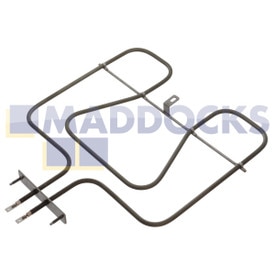
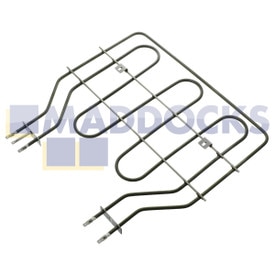
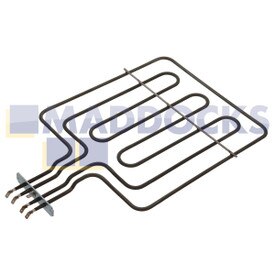
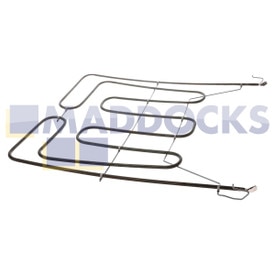
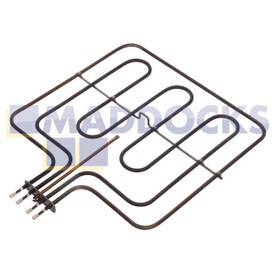
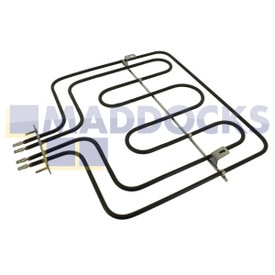


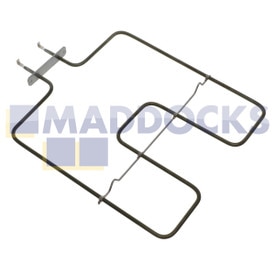
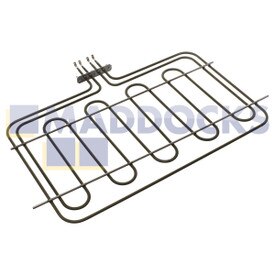

Grill and base heating elements provide heat from different positions within an electric oven. Grill elements are usually mounted at the top of the cooking cavity and provide intense heat for grilling and browning. Base elements produce heat from below and may be concealed beneath the oven floor. The correct replacement depends on the appliance model, the heating function and the original element design.
Use the complete appliance model and product or service number when identifying a replacement. Compare the original element reference, voltage, wattage, overall dimensions, mounting plate, fixing centres and electrical terminals. Some grill elements contain two separate heating circuits, with individual wattage ratings for each section. These must be matched to the correct control arrangement. Elements with similar shapes or mounting dimensions are not necessarily interchangeable.
Maddocks supplies genuine original and compatible grill and base elements for selected appliances from manufacturers including Bosch, Neff, Siemens, Beko, Hotpoint, Indesit, Electrolux, Zanussi, Belling, Stoves and Rangemaster. Where documentation is available, use Maddocks Pinpoint to locate diagrams and part references. Check the product description and Model Compatibility Checker to confirm the stated appliance application before ordering.
If the grill fails to heat, takes unusually long to brown food or operates on only one setting, the upper heating element may be faulty. In ovens with a dual-circuit grill, one heating section may fail while another continues to work. However, an issue with the selector switch, electrical connections or heating controls can produce similar symptoms. A visually intact element can still have an electrical fault, so the correct diagnosis requires testing rather than appearance alone.
If an oven struggles to heat food from below, or the lower heating function no longer operates, the base element is one possible cause. Some ovens use top, bottom and rear fan oven elements in different combinations depending on the selected cooking programme. Check which functions are affected before deciding which element needs replacing. A loss of heat on several settings may indicate a fault elsewhere in the control system.
Once the failed component has been confirmed, match the original element's electrical and mounting specifications. Replacement element fixings may be needed if the existing brackets or fasteners are damaged. Faults involving thermostats and thermal cut-outs should also be considered during diagnosis. Electrical testing and replacement should be carried out by a competent person with the appliance safely isolated.
Start with the complete appliance model and original manufacturer part reference. Establish whether you need an upper grill element or a lower base element, then compare the voltage, wattage, shape, dimensions, fixing centres and terminal arrangement. For dual-circuit grill elements, check the individual heating circuit specifications as well as the overall design. A replacement must be suitable for the appliance's electrical circuit and mounting arrangement. Use Maddocks Pinpoint and the Model Compatibility Checker where available to help confirm the correct part.
A single-circuit grill element has one heating circuit. A dual-circuit element contains separate heating sections that the appliance can control according to its design. On some ovens, this allows a choice between full-width and reduced-area grilling, or different heating configurations. Dual-circuit elements may have separate wattage ratings and additional electrical terminals. A single-circuit element should not be substituted for a dual-circuit type unless it is an approved replacement specified by the manufacturer.
The grill element may have an internal electrical failure, particularly if one section of a dual-circuit element no longer operates. However, a faulty selector switch, thermostat, wiring connection or another control component can produce similar symptoms. Visible distortion, blistering or a break may suggest element damage, but some electrical failures leave no obvious external signs. The element and associated controls should be tested by a competent person before deciding which replacement is required.
Not necessarily. A failed lower heating element is one possible cause, but ovens use different combinations of elements depending on the cooking setting. A thermostat, selector switch, thermal cut-out or damaged electrical connection could also prevent the base element from operating. Compare performance across the appliance's available cooking functions and have the suspected circuit tested before ordering a replacement. Where the base element is confirmed faulty, match the original part reference, electrical rating and mounting arrangement. Electrical repairs should be completed with the appliance safely isolated.